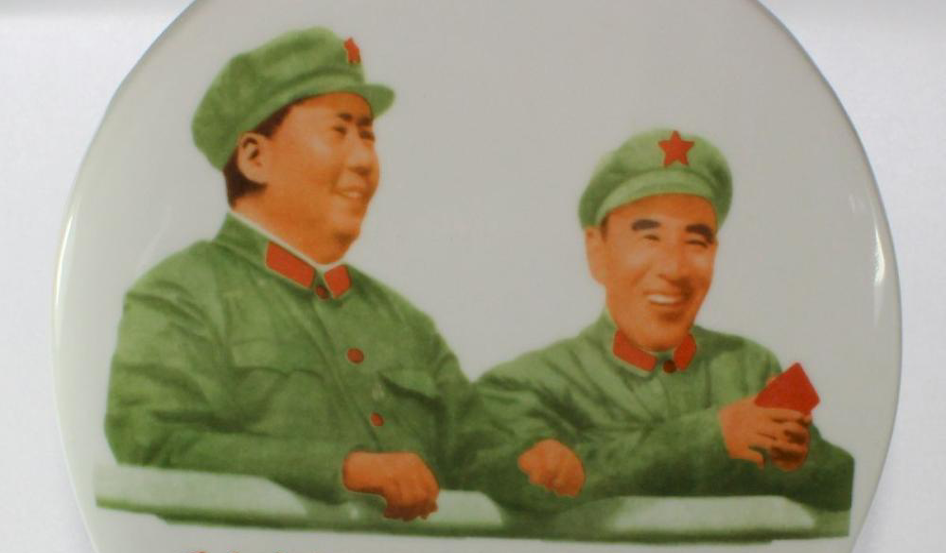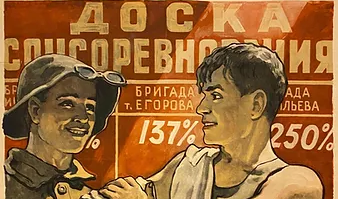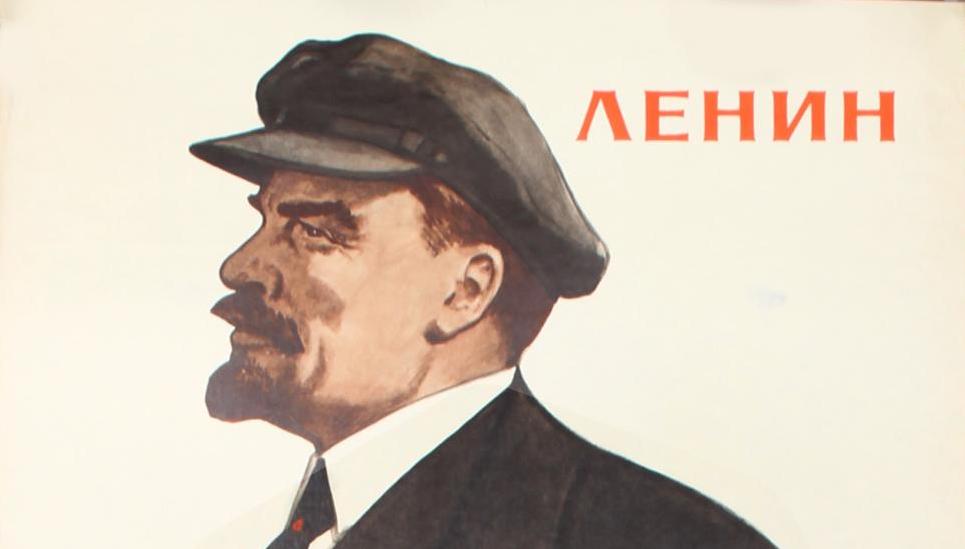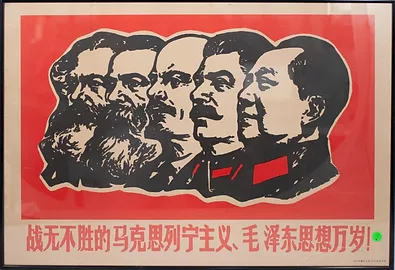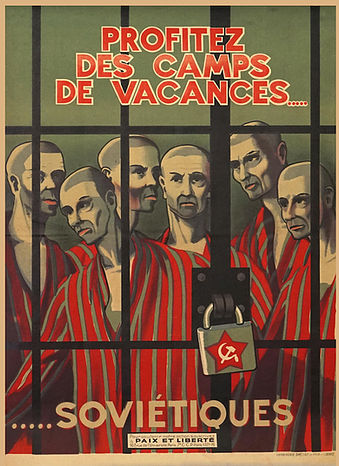
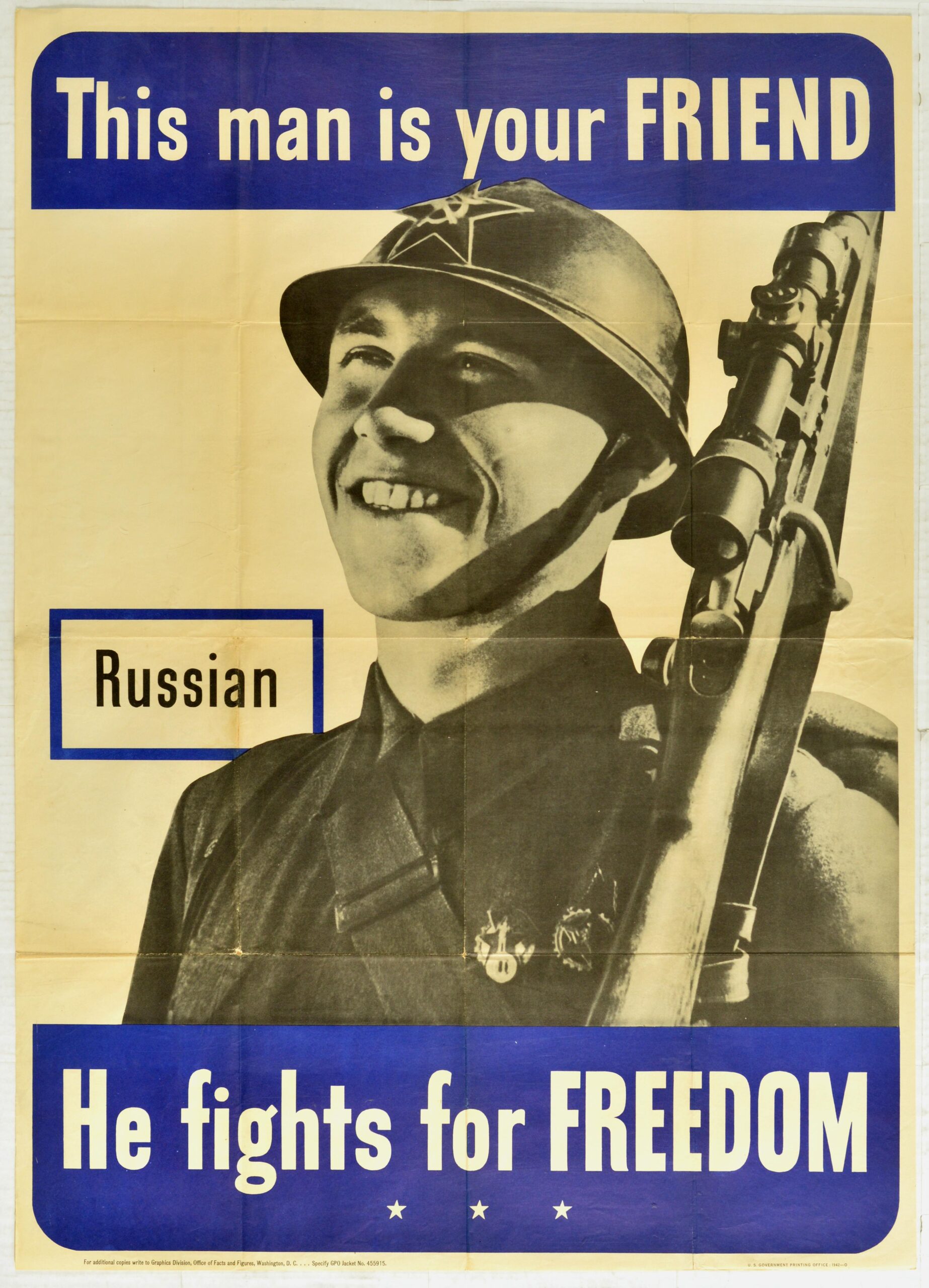
This large poster was produced in the United States in 1942, shortly after America entered the Second World War and found itself an ally of the Soviet Union – a communist state which it had previously viewed with deep suspicion. The two countries became allies only because Hitler had become their common enemy. The USA and Britain needed the Soviet Union to soak up Germany’s fighting power in the East of Europe while they gathered their forces to counter-attack Germany in the West.
The uncomfortable nature of the alliance was acknowledged by Winston Churchill who remarked in 1941, “If Hitler invaded Hell, I would at least make a favourable reference to the Devil in the House of Commons.” The comment captures the moral compromise he and the Americans believed was necessary.
The poster was printed by the U.S. Government Printing Office for the Office of Facts and Figures as part of a U.S. government propaganda campaign. The British government also encouraged a positive image of the Soviet Union.
The extent of the aid given by Britain to the Soviet Union is not widely known. It included the donation of an astonishing number of aircraft and tanks among many other things. This is a statement made by the Prime Minister, Clement Attlee, to the House of Commons in 1946:
In the period from 1st October, 1941, to 31st March, 1946, we supplied to the Soviet Union 5,218 tanks, of which 1,388 were from Canada. We supplied 7,411 aircraft, including 3,129 aircraft sent from the United States of America. As previously explained on the 10th May, 1944, the aircraft from the United States of America were sent on United States Lend Lease to the Soviet Union as part of the British commitment to the U.S.S.R. in exchange for the supply of British aircraft to United States Forces in the European Theatre. The total value of military supplies despatched amounts to approximately £308 million. We have also sent about £120 million of raw materials, foodstuffs, machinery, industrial plant, medical supplies and hospital equipment.
We are very glad to have been able to give this assistance to our Soviet Allies and to have helped to equip and sustain them in their bitter struggle against the common enemy.
https://api.parliament.uk/historic-hansard/commons/1946/apr/16/russia-british-empire-war-assistance
Once Nazi Germany was defeated, relations between the United States and Britain, on the one hand, and the Soviet Union, on the other, rapidly deteriorated. The Soviet Union showed it was no “friend” of Eastern Europe or the West. Soviet forces were certainly not fighting “for freedom” but the very opposite. Through force and terror, the Soviet Union established dominance over all Baltic States (Lithuania, Latvia and Estonia), Poland, East Germany, Czechoslovakia, Hungary and Bulgaria. Resistance movements were crushed. Over three million people were deported to Siberia and other remote parts of the Soviet Union as part of the Soviet Union’s destruction of the independence and freedom of these countries. The Soviet Union also tried to dominate Romania and Yugoslavia but with less success. Similarly, it tried to wrest West Berlin out of the hands of the Western allies and enforce its totalitarian rule there, too.
Share on Facebook
Share on WhatsApp
Share on X
More Artefacts